

Temperature governs the rate of nearly every biological process. Plants cannot move to thermoregulate behaviourally, so they experience the full range of thermal variation their environment imposes, and their physiology responds directly. Perhaps the most consequential of those responses is photosynthesis, which is the most important process on Earth. It supplies the energy that fuels the biosphere, and is the largest single flux in the global carbon cycle, making it a key moderator of climate change. Understanding how rising temperatures affect photosynthesis is therefore central to forecasting the trajectory of climate change and the future of the biosphere.
This is harder than it appears. Assimilation-temperature responses are often obtained on individual leaves under controlled conditions, while ecosystem carbon uptake is partitioned from eddy covariance measurements, and neither translates straightforwardly into the other. Several challenges compound the difficulty. Plants do not experience the air temperatures our weather stations record, because leaf traits and energy budgets determine tissue temperatures that can depart from air by several degrees. Physiological rates exhibit peaked temperature responses, rising to a thermal optimum and declining above it, yet they are often described with monotonic Arrhenius models that yield biased, observation-dependent parameter estimates. Thermal acclimation can alter assimilation-temperature responses within a day, decoupling carbon and water fluxes observed at higher levels of organization from acute leaf-level kinetics. And the instruments and methods we use to quantify these responses can have measurement biases large enough to change our conclusions.
Our lab addresses these challenges, integrating the life and physical sciences to understand organism-environment interactions from molecules to the biosphere. We draw on physics, chemistry, biology, engineering, and geoscience to develop mechanistic models and theories, which we parameterize, test, and refine using observations and experiments from the laboratory and the field. We develop the measurement methods those tests require. Our goal is to advance a mechanistic basis for predicting plant and ecosystem functioning in novel climates that have no historical analogue.
1. Heat tolerance and the thermal limits of the biosphere
Photosynthetic heat tolerance sets the upper temperature at which plants can assimilate carbon, and therefore an upper bound on the functioning of the biosphere. It is conventionally quantified using threshold temperatures such as the critical temperature for photosystem II function, which characterize the temperature of a heat exposure but not its duration. Because thermal damage accumulates over time, threshold metrics conflate exposure durations that are not equivalent, and they provide no mechanistic basis for testing causal hypotheses or extrapolating to novel temperature and duration combinations.
We recently developed and tested a quantitative theory of photosynthetic heat inactivation grounded in chemical kinetics, in which the temperature and duration of exposure are accounted for explicitly and hypothesized causal mechanisms are testable. Applying the theory to photosystem II temperature responses across 177 species from 157 families, we found that heat tolerance is primarily governed by protein denaturation rather than lipid membrane breakdown, resolving a long-standing ambiguity between two proposed mechanisms. The theory further predicts an upper acclimation limit near 60 °C, set by the structural stability of heat shock proteins, a prediction consistent with global heat tolerance data for 836 species.
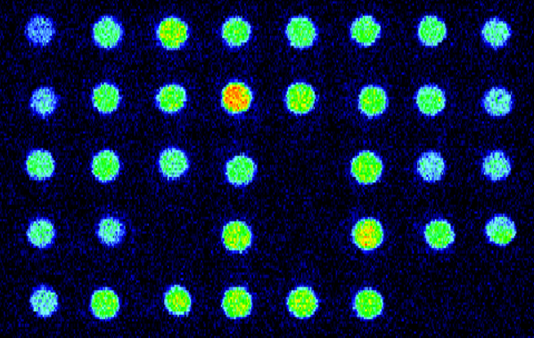
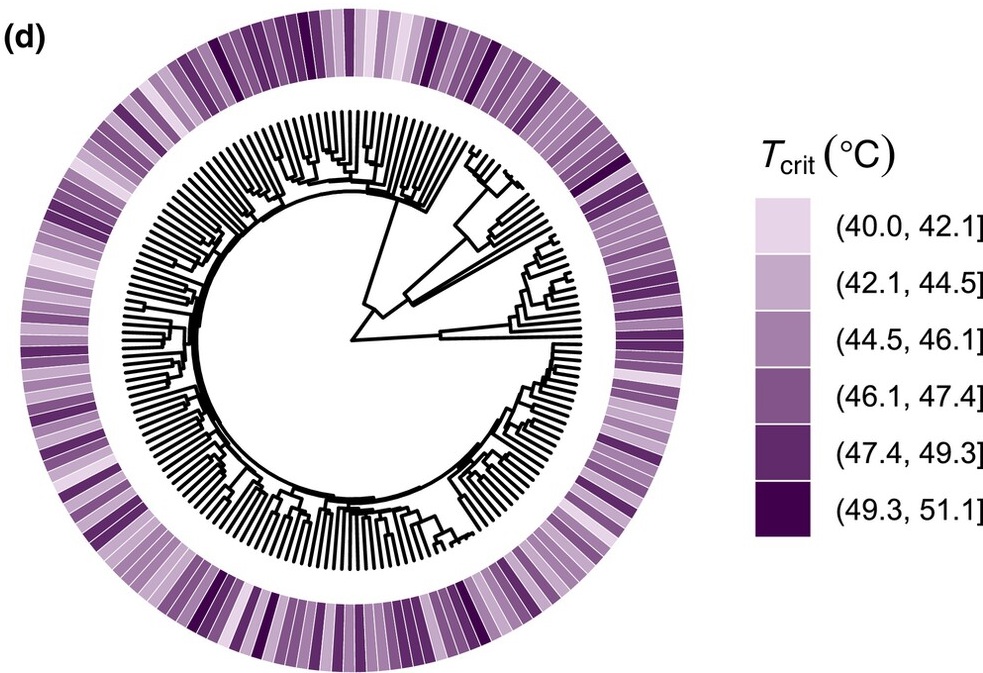
Heat tolerance also behaves differently from leaf functional traits. In a common garden that minimizes covariation between taxonomy and climate, carbon economics and energy balance traits showed clear phylogenetic structure, whereas photosynthetic heat tolerance metrics showed none, and varied along an axis orthogonal to traits. Leaf morphology is primarily constrained by evolutionary history, whereas heat tolerance acclimates readily to leaf microclimates. Trait frameworks that treat these on a common footing conflate processes operating on very different timescales.
This work connects to collaborative efforts addressing how heat tolerance should be measured and what it means at larger scales, including how data and theory at one level of organization may not always scale straightforwardly to other levels, how methodological choices influence reported global variation in thermal tolerance, and how photosystem II acclimates on timescales that snapshot measurements cannot resolve.
Key papers
Bison NN, Michaletz ST. In press. The kinetic basis of photosynthetic heat tolerance. Nature Ecology & Evolution.
Bison NN, Michaletz ST. 2024. Variation in leaf carbon economics, energy balance, and heat tolerance traits highlights differing timescales of adaptation and acclimation. New Phytologist 242:1919-1931. Full text, Supporting information, Data and code
Perez TM, Feeley KJ, Michaletz ST, Slot M. 2021. Methods matter for assessing global variation in plant thermal tolerance. Proceedings of the National Academy of Sciences USA 118:e2024636118. Full text
Evans MEK, Hu J, Michaletz ST. 2025. Scaling plant responses to heat: From molecules to the biosphere. Science 388:1167-1173. Full text
Posch BC, Amoanimaa-Dede H, Aparecido LMT, Atkin OK, Bison NN, Blonder BW, Coast O, Doughty CE, Guo JS, van Haren J, Michaletz ST, Moran ME, Scafaro AP, Slot M, Wiebe BC, Winter K, Zhu L, Zorger BB, Hultine KR. 2026. High-temperature acclimation of photosystem II in land plants. New Phytologist 249:1108-1123. Full text
2. Kinetics and acclimation of carbon assimilation
Metabolic theory posits that the temperature dependence of all biological rates originates in the kinetics of rate-limiting biochemical reactions, and formalizes this using the Arrhenius model and an activation energy. This idea has occupied scientists for more than a century, and while the premise is sound, the mathematical formalization is not, and we think it constrains what the field can learn.
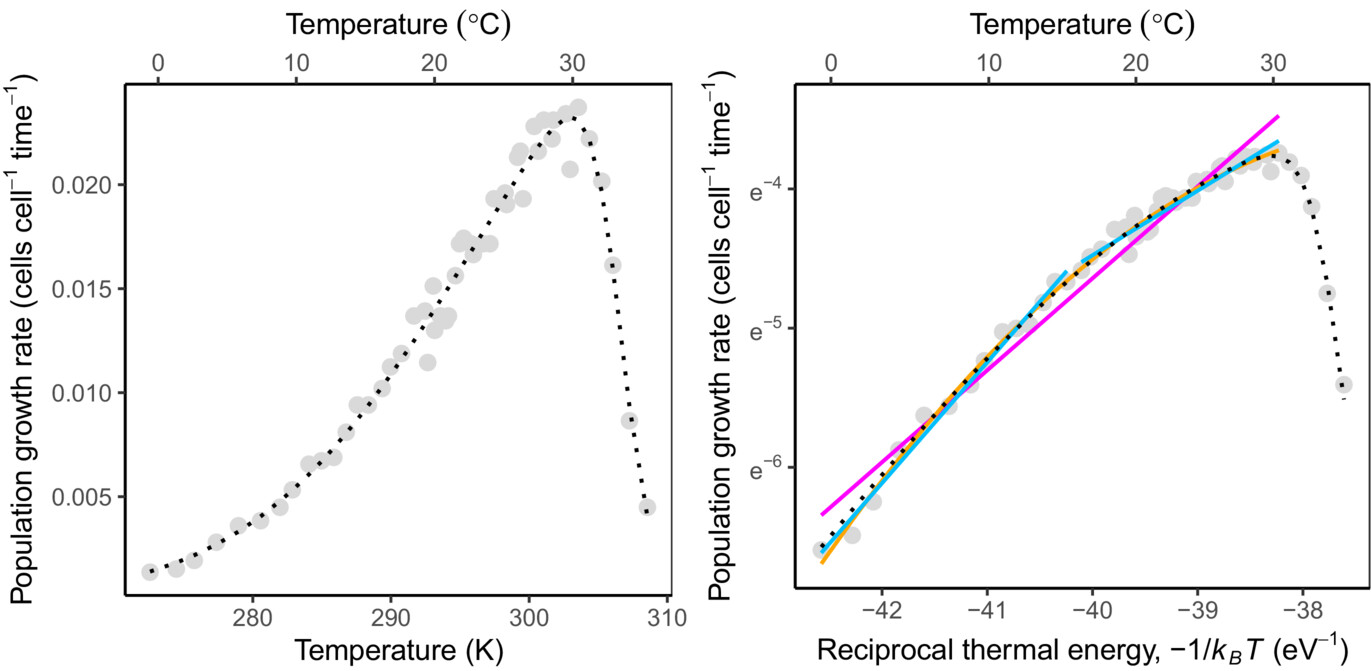
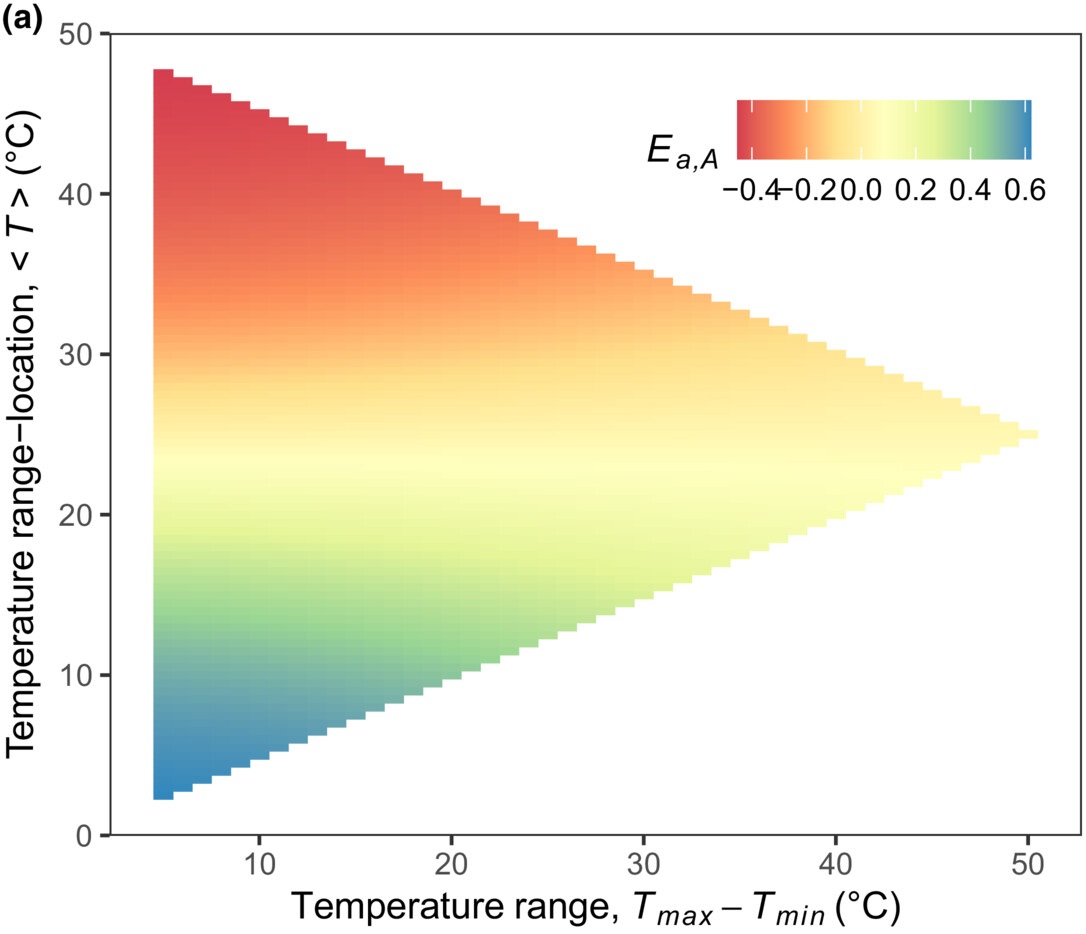
Almost all biological rates exhibit peaked temperature responses. Fitting monotonic models to peaked data yields activation energies that are variable, systematically underestimated, and strongly sensitive to the observed temperature range and the noise structure of the data. Because these parameter estimates propagate directly into projections of biological rate responses to climate change, the consequences are not confined to methodology. We have argued for a shift to peaked models that characterize the full temperature response, and evaluated how two prominent peaked models behave when applied to incomplete and noisy datasets like those scientists actually collect.
Acclimation resolves a second and longer-standing puzzle. Leaf photosynthesis is strongly temperature sensitive, yet growth and productivity measured across climate gradients frequently are not. By integrating relative growth rate theory, metabolic theory, and biochemical photosynthesis theory into a carbon budget model of plant growth, and testing it with concurrent measurements of acute photosynthesis, acclimated photosynthesis, and growth rate in the same individuals, we showed that photosynthetic acclimation mediates how assimilation kinetics scale from leaf to whole plant. Existing models of photosynthetic acclimation failed to reproduce the observed growth responses.
The timescale of acclimation is much shorter than generally assumed. Across 243 assimilation-temperature response curves from 102 species in 96 families grown in a common garden, local environmental conditions were the strongest predictors of response parameters, with the thermal optimum best predicted by mean air temperature on the day of measurement. Response parameters showed no phylogenetic structure and only modest relationships with leaf functional traits or climate of origin. Acclimation on daily timescales is not well represented in current Earth system models.
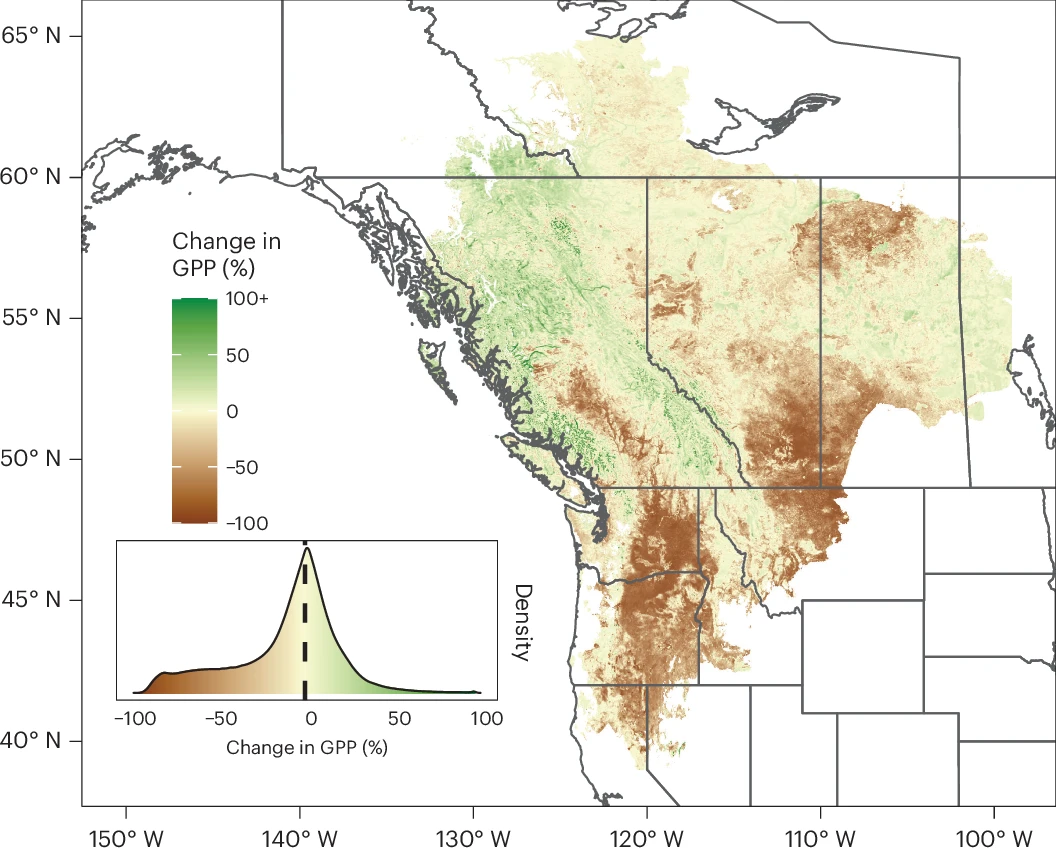
These temperature responses propagate to ecosystem-scale carbon uptake. Working with collaborators after the 2021 western North American heatwave, we modelled changes in gross primary productivity across the affected region and found that the sign of the response depended on where leaf temperatures fell relative to photosynthetic thermal optima: GPP declined by up to 75% in warm, arid areas where leaves were driven above their optima, and increased by up to 30% in cooler, wetter regions where warming brought leaves closer to them. Thermal optima are thus not only a detail of leaf physiology, they determine whether a heatwave increases or decreases regional carbon uptake.
Key papers
Garen JC, Michaletz ST. 2025. Rapid climate acclimation (not traits or phylogeny) drives variation in photosynthesis temperature response. Global Change Biology 31:e70474. Full text, Supplementary information, Data and code
Garen JC, Michaletz ST. 2024. Acclimation unifies the scaling of carbon assimilation across climate gradients and levels of organisation. Ecology Letters 27:e70004. Full text, Supplementary information, Data, Code
Michaletz ST, Garen JC. 2024. Hotter is not (always) better: Embracing unimodal scaling of biological rates with temperature. Ecology Letters 27:e14381. Full text, Supporting information, Data and code
Michaletz ST. 2018. Evaluating the kinetic basis of plant growth from organs to ecosystems. New Phytologist 219:37-44. Full text, Supporting information, R code
Baum JK, Slein MA, Garen JC, Sang Z, Emry S, Goodwin KJA, Collins CG, Lewthwaite J, Tseng M, Michaletz ST, Burton AC, Harley CDG, Srivastava DS, and The 2021 Western North American Heat Dome Data Consortium. 2026. Widespread ecological responses and cascading effects of the 2021 western North American heatwave. Nature Ecology & Evolution 10:864-879. Full text, Supplementary information
3. Plant hydraulics
Water transport and water loss are inseparable from leaf temperature and carbon gain. Transpiration cools leaves, stomatal closure warms them, and hydraulic network traits determine the supply that makes either possible.
Leaves continue to lose water after stomata close, at a rate described by the leaf minimum conductance to water vapor. This flux is small relative to stomatal conductance under favorable conditions, but during hot drought it becomes consequential for plant mortality and leaf-, plant-, and landscape-scale water balance. Studies partitioning minimum conductance into cuticular and stomatal components have reached different conclusions. Measuring minimum and cuticular conductance across 20 to 50 °C in eleven broadleaf species, we found that the dominant pathway shifts from stomatal toward cuticular transpiration as temperature rises, which offers a parsimonious explanation for the disagreement in the literature. Trait relationships with conductance strengthened at higher temperatures, and cuticular conductance was large enough to bias estimates of photosynthetic capacity in species with low stomatal conductance.
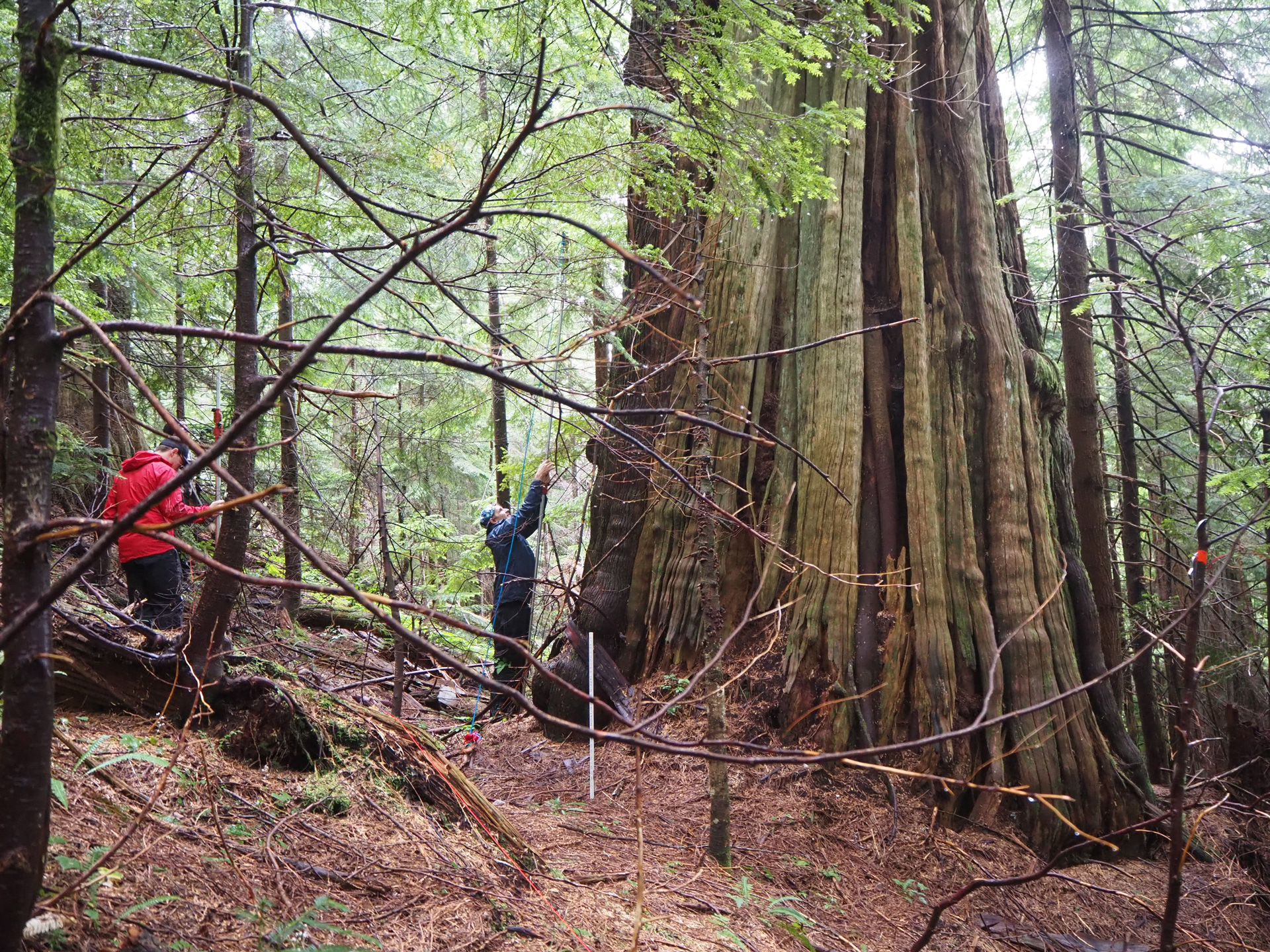
Hydraulic network traits reflect two competing selective pressures: minimizing hydraulic resistance, which favours wide conduits, and preventing conduit wall collapse under tension, which does not. Existing theory addresses the first but not the second, and scaling in roots has been largely unexamined. We developed new theory for vertical variation in conduit thickness-to-span ratios and tested it against nearly 600,000 xylem conduits spanning above and belowground organs in five conifer species, using a new bootstrapping approach to minimize sampling bias. Conduits widened with distance from the leaf tip, with an exponent numerically close to several theoretical predictions, and widened from fine to coarse roots, mirroring the aboveground pattern. Thickness-to-span ratios increased from base to tip, and nearly all conduits exceeded a predicted critical collapse limit with a safety factor greater than two, indicating that xylem walls are generally overbuilt relative to what collapse resistance alone requires. Tip-to-base widening also exhibited curvature in log-log space rather than the strict power law most models predict, with the departure concentrated in the uppermost meter, suggesting that fixed-exponent scaling oversimplifies conduit widening near the leaf tip.
With collaborators, we have also argued that plant water use theory has been constructed too narrowly around water as a cost of carbon gain, and that hypotheses invoking thermal stress avoidance, reproduction, and competition for water remain largely untested.
Key papers
Cross M, Michaletz ST. 2026. Excision increases branch water potential but generally reduces leaf gas exchange. Tree Physiology 46:tpag035. Full text, Supplementary data
Simovic M, Michaletz ST. 2025. Hydraulics and structural mechanics jointly shape root-to-leaf scaling of xylem conduit traits. Plant, Cell & Environment 48:6912-6923. Full text, Supporting information, Data and code
Garen JC, Michaletz ST. 2025. Temperature governs the relative contributions of cuticle and stomata to leaf minimum conductance. New Phytologist 245:1911-1923. Full text, Supporting information, Data and code
Blonder B, Aparecido LMT, Hultine KR, Lombardozzi D, Michaletz ST, Posch BC, Slot M, Winter K. 2023. Plant water use theory should incorporate hypotheses about extreme environments, population ecology, and community ecology. New Phytologist 238:2271-2283. Full text
4. Measurement and inference in plant ecophysiology
Theory is testable only to the precision of the data used to test it. A recurring result in our work is that standard measurement methods in plant ecophysiology can have biases large enough to change scientific conclusions, and that these biases are often invisible in published data.
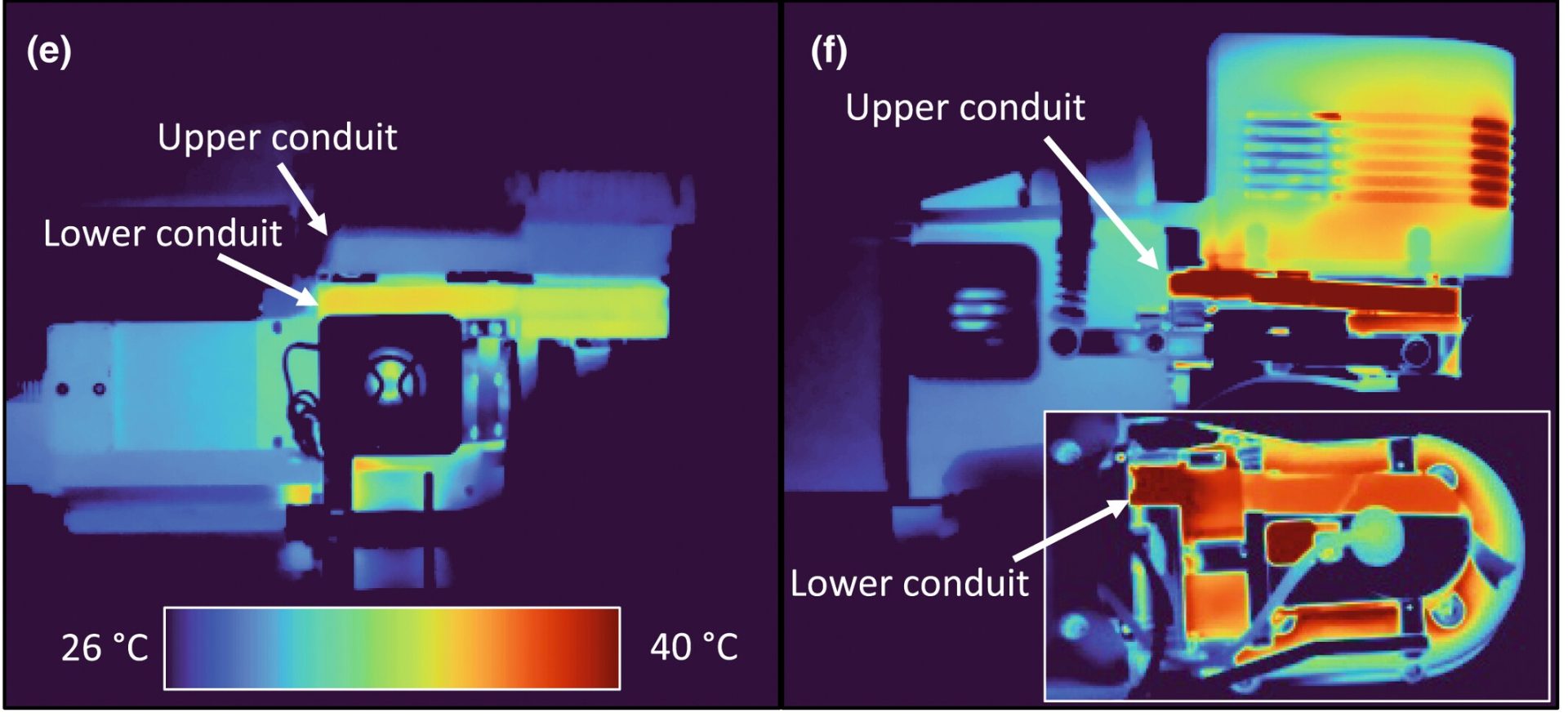
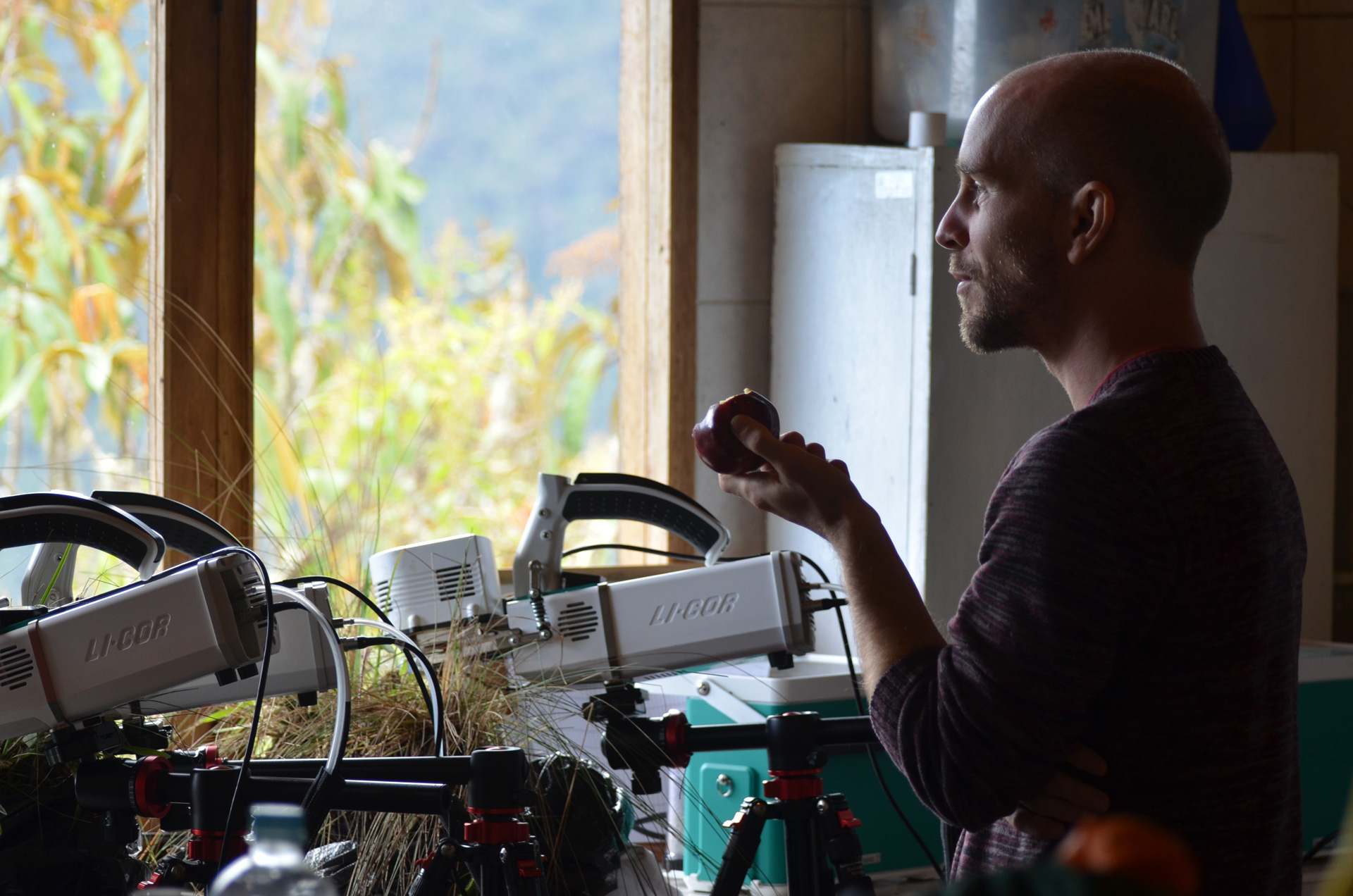
Portable gas exchange analyzers supply much of the physiological data used to parameterize Earth system models. Characterizing internal thermal gradients in two widely used instruments, we found air temperature errors up to 7.2 °C and leaf temperature errors up to 5.3 °C in the earlier generation instrument, with propagated errors in stomatal conductance and intercellular CO2 increasing as measurement temperatures departed from ambient. Branch excision, which is widely used to reach leaves in tall or otherwise inaccessible canopies, consistently increases branch water potential and generally reduces stomatal conductance and photosynthesis, with effect sizes that depend on species, hydraulic traits, and water use strategy. A meta-analysis of 26 species indicates the effect is general but not uniform, so study-specific corrections are required.
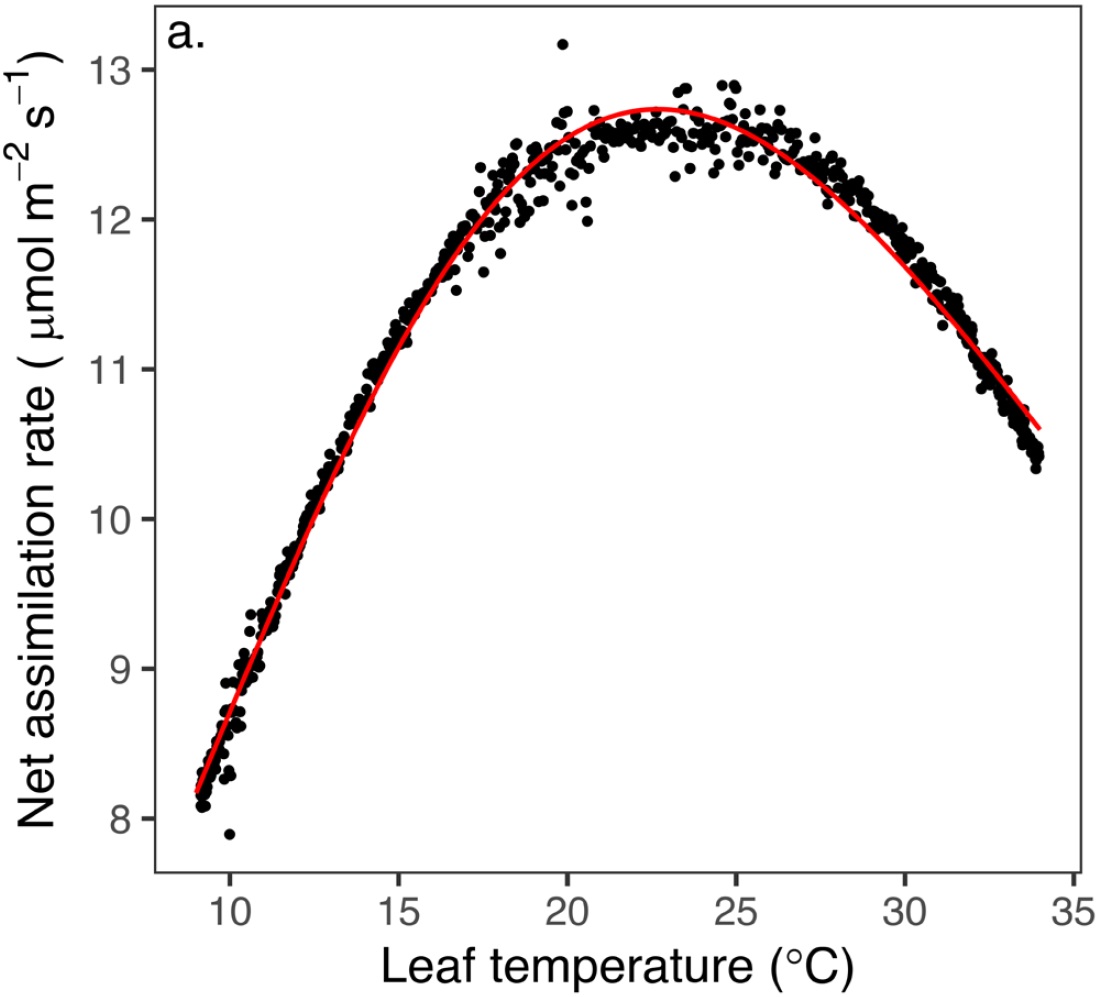
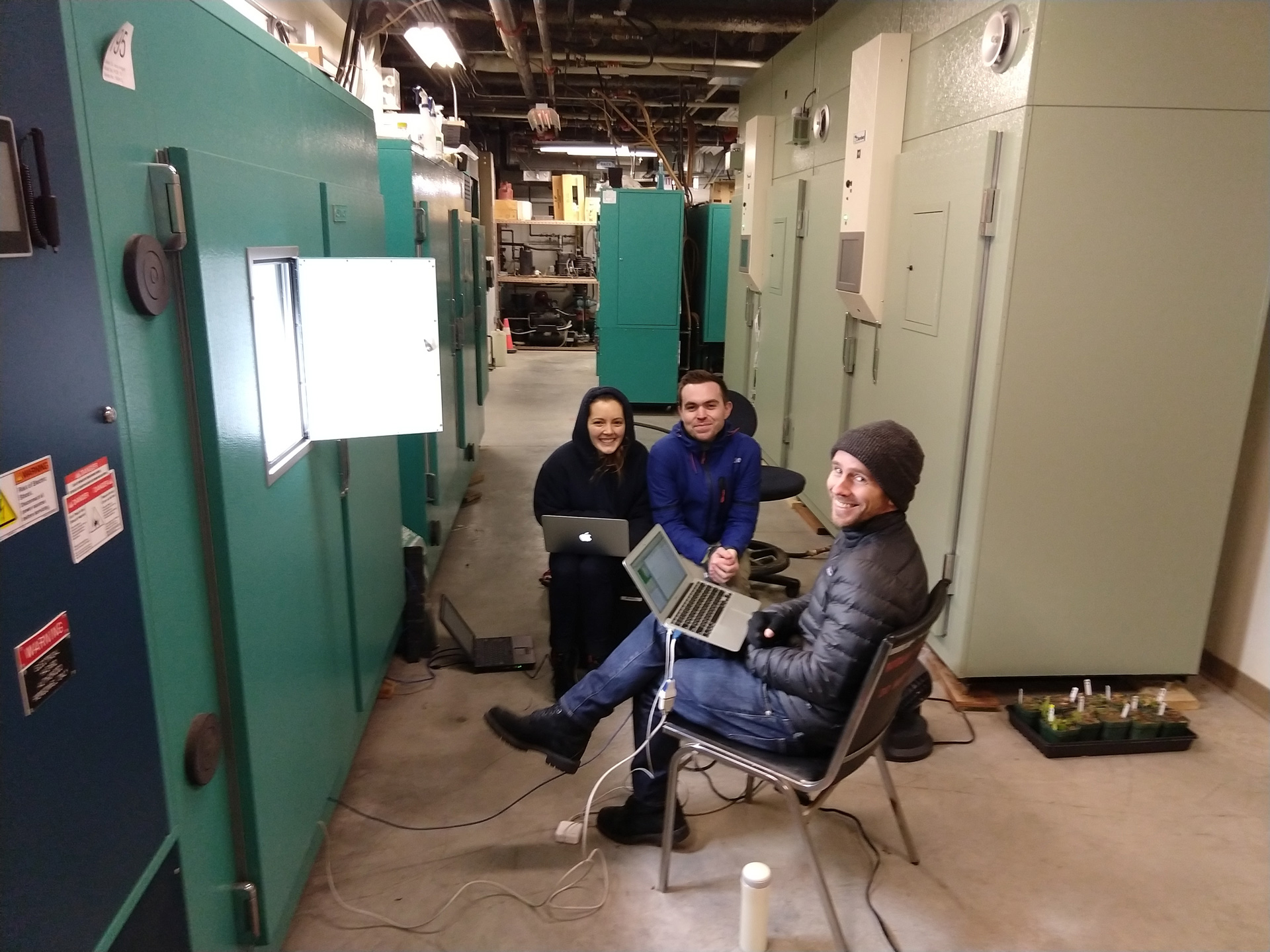
Where existing practice is limiting, we build alternatives. The Fast Assimilation-Temperature Response (FAsTeR) method measures gas exchange temperature responses using a continuous temperature ramp with nonequilibrium measurements and post hoc corrections, rather than discrete equilibrated steps as in conventional methods. It reproduces conventional results while reducing measurement time roughly threefold and increasing data density by a factor of about 55, which substantially improves confidence in fitted parameters and reduces sensitivity to noise. Related work addresses how canopy-top sampling misrepresents canopy-scale thermoregulation, how thermal tolerance protocols shape reported global patterns, and how imbalanced data bias estimates of scaling exponents.
Key papers
Cross M, Michaletz ST. 2026. Excision increases branch water potential but generally reduces leaf gas exchange. Tree Physiology 46:tpag035. Full text, Supplementary data
Garen JC, Michaletz ST. 2024. Fast Assimilation-Temperature Response: A FAsTeR method for measuring the temperature dependence of leaf-level photosynthesis. New Phytologist 241:1361-1372. Full text, Data and code
Garen JC, Branch HA, Borrego I, Blonder B, Stinziano JR, Michaletz ST. 2022. Gas exchange analysers exhibit large measurement error driven by internal thermal gradients. New Phytologist 236:369-384. Full text, Supporting information, Data and code
5. Leaf temperatures, energy budgets, and thermal responses
Leaf temperatures exhibit a range of responses to variation in air temperature. Under poikilothermy, leaf temperature tracks air temperature closely. Under limited homeothermy, leaf temperature varies less than air temperature, so that leaves are warmer than air in cool conditions and cooler than air in warm conditions. Under megathermy, leaf temperatures increase more than air for a given air temperature change. All three responses are predicted from leaf energy budget theory and have been observed empirically. Their relative prevalence within the complex microclimates of real plant canopies remains a key open question, and one with direct consequences for how trait-climate relationships, vegetation dynamics, and ecosystem carbon budgets are modeled.
Leaf energy budgets provide the mechanistic basis for addressing this. Radiative, convective, and evaporative fluxes are governed by leaf traits including size, thickness, absorptance, and stomatal conductance, so the same traits that determine carbon economics also determine leaf temperature. We have developed theory that unifies these two perspectives, deriving thermoregulatory behaviour from selection on leaf thermal and photosynthetic traits to maximize lifetime carbon gain. The theory was consistent with global data for leaf temperatures spanning an air temperature range of approximately 60 °C. Related work derives how the slope of the leaf versus air temperature relationship should vary with traits and microenvironment.
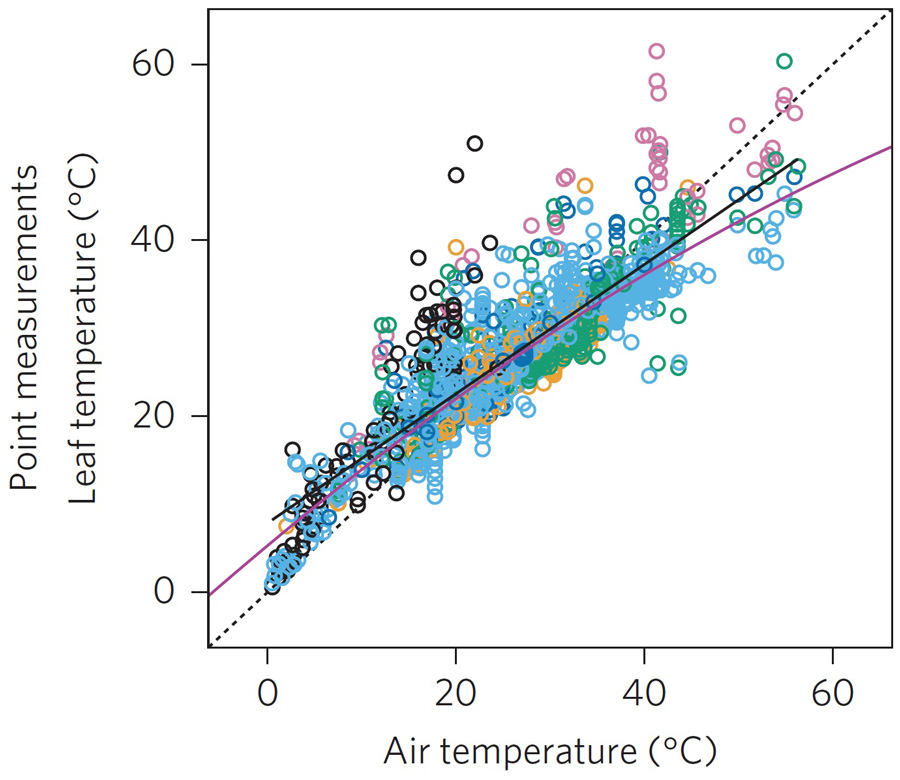
Predicting these responses from the traits ecologists routinely measure has proven difficult. Across a 1,100 m elevational gradient spanning desert, montane, and alpine communities, energy balance traits were only weakly related to environmental gradients and poorly predicted by common functional traits. Our (in)ability to measure leaf temperatures compounds the challenge. Because leaf temperature varies strongly with canopy position, measurements taken at the canopy top, which is what most thermal imaging and remote sensing captures, do not accurately quantify canopy-scale thermoregulation.
Our work on heat and mass transfer in plant canopies extends back two decades, to wind tunnel studies of forced convection in conifer branches and buds.
Key papers
Evans MEK, Hu J, Michaletz ST. 2025. Scaling plant responses to heat: From molecules to the biosphere. Science 388:1167-1173. Full text
Garen JC, Aparecido LMT, Blonder BW, Cavaleri MA, Slot M, Michaletz ST. 2023. Canopy-top measurements do not accurately quantify canopy-scale leaf thermoregulation. Proceedings of the National Academy of Sciences USA 120:e2301914120. Full text
Blonder B, Escobar S, Kapás RÉ, Michaletz ST. 2020. Low predictability of energy balance traits and leaf temperature metrics in desert, montane and alpine plant communities. Functional Ecology 34:1882-1897. Full text, Supporting information
Blonder B, Michaletz ST. 2018. A model for leaf temperature decoupling from air temperature. Agricultural and Forest Meteorology 262:354-360. Full text, File S1, File S2, Mathematica code, R code, Data
Michaletz ST, Weiser MD, McDowell NG, Zhou J, Kaspari M, Helliker BR, Enquist BJ. 2016. The energetic and carbon economic origins of leaf thermoregulation. Nature Plants 2:16129. Full text
Michaletz ST, Weiser MD, Zhou J, Kaspari M, Helliker BR, Enquist BJ. 2015. Plant thermoregulation: Energetics, trait-environment interactions, and carbon economics. Trends in Ecology & Evolution 30:714-724. Full text, Supplementary material
Michaletz ST, Johnson EA. 2006. Foliage influences forced convection heat transfer in conifer branches and buds. New Phytologist 170:87-98. Full text, Erratum
6. Scaling from molecules to ecosystems
Biological rates scale predictably with body size and temperature, and metabolic theory proposes that these relationships are invariant across levels of organization, from cells to organisms to ecosystems. That invariance is what makes the theory both powerful and hard to test. A recurring question in our work is whether the physiological kinetics measured on leaves actually propagate to the growth of plants and the productivity of ecosystems, and if not, why not.
Terrestrial net primary production correlates with mean annual temperature and precipitation, a pattern long interpreted as evidence that climate drives production directly through its effect on metabolic kinetics. Climate may also act indirectly, however, through plant age, standing biomass, growing season length, and traits. Extending metabolic scaling theory to distinguish these pathways and testing it against a global compilation of woody plant biomass and production data, we found that stand age and biomass explained most of the variation in production, while temperature and precipitation explained almost none. Production across sites is nonetheless characterized by a common scaling relationship, which makes the result tractable for global change models. Subsequent work assembled the broader evidence for indirect climate control of plant production.

Why the temperature signal attenuates as we move up through levels of organization is a question we have approached from several directions. Part of the answer is methodological. Monotonic Arrhenius models fit to peaked temperature responses yield activation energies that are biased low and sensitive to the temperature range sampled, so the kinetic predictions being tested are themselves unreliable. This offers a parsimonious explanation for the long-standing discrepancy between the canonical activation energies for respiration and photosynthesis, which were estimated from data with very different thermal optima. Part of the answer is biological. Thermal acclimation adjusts photosynthetic physiology on timescales of a day, decoupling the temperature dependence of whole-plant growth from the acute temperature sensitivity of leaf photosynthesis, and a carbon budget model that accounts for acclimation reconciles the two.
Estimating scaling relationships reliably is a major challenge. Ecological data are rarely distributed evenly across the range of the predictor, and fitting linear models to log-transformed data that cluster in one region biases slope and confidence interval estimates toward the region of highest data density, inflating the risk of both type I and type II errors. We have introduced a bootstrapping approach that rebalances data prior to fitting, validated it against a known slope from plant height-diameter data, and shown that balanced and imbalanced fits to the same metabolic rate versus body mass data support opposite conclusions about agreement between observation and theory.
Key papers
Simovic M, Michaletz ST. 2025. Harnessing the full power of data to characterise biological scaling relationships. Global Ecology and Biogeography 34:e70019. Full text, Supporting information, Data and code, balancR package for R
Garen JC, Michaletz ST. 2024. Acclimation unifies the scaling of carbon assimilation across climate gradients and levels of organisation. Ecology Letters 27:e70004. Full text, Supplementary information, Data, Code
Michaletz ST, Garen JC. 2024. Hotter is not (always) better: Embracing unimodal scaling of biological rates with temperature. Ecology Letters 27:e14381. Full text, Supporting information, Data and code
Michaletz ST. 2018. Evaluating the kinetic basis of plant growth from organs to ecosystems. New Phytologist 219:37-44. Full text, Supporting information, R code
Michaletz ST, Kerkhoff AJ, Enquist BJ. 2018. Drivers of terrestrial plant production across broad geographical gradients. Global Ecology and Biogeography 27:166-174. Full text, Supplementary information, Source data
Michaletz ST, Cheng D, Kerkhoff AJ, Enquist BJ. 2014. Convergence of terrestrial plant production across global climate gradients. Nature 512:39-43. Full text, Supplementary information, Corrigendum
7. Plant Functional Traits Courses

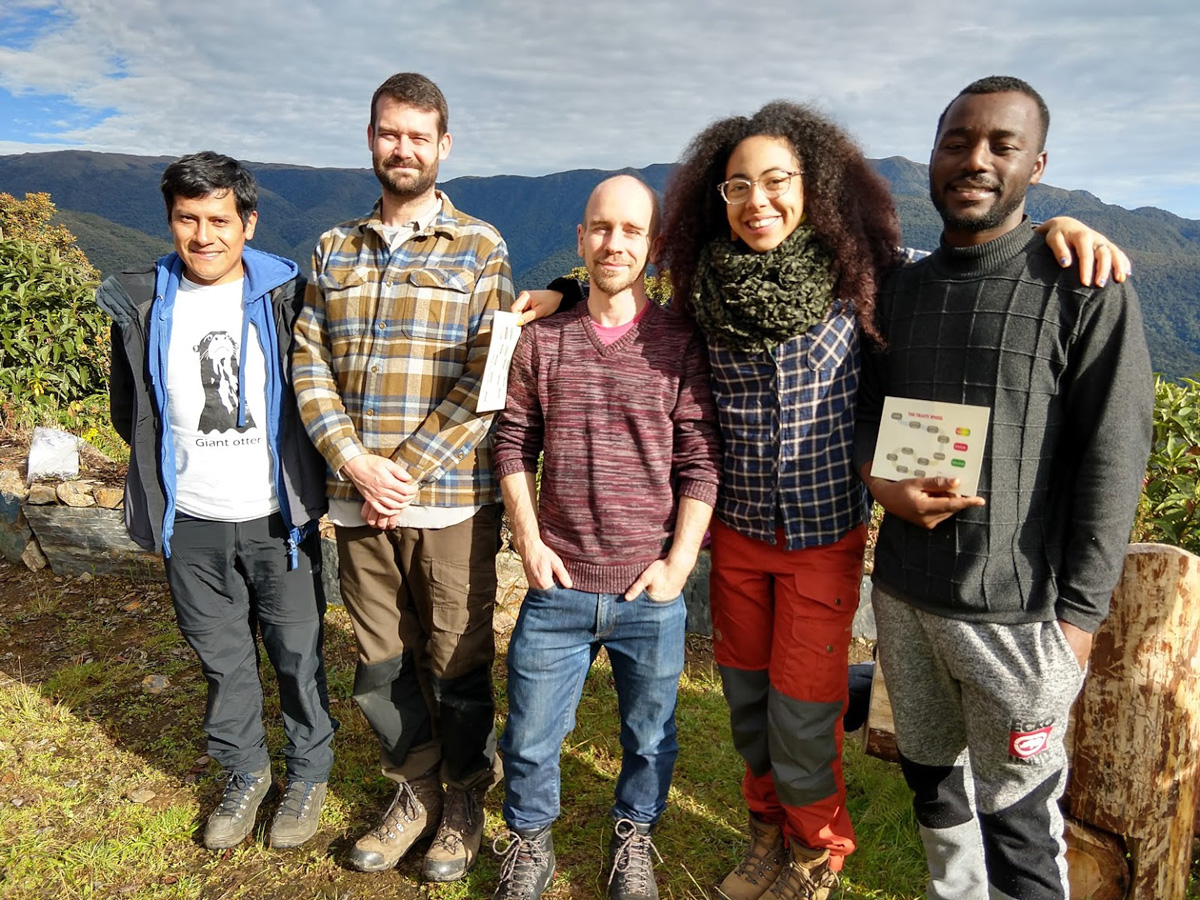
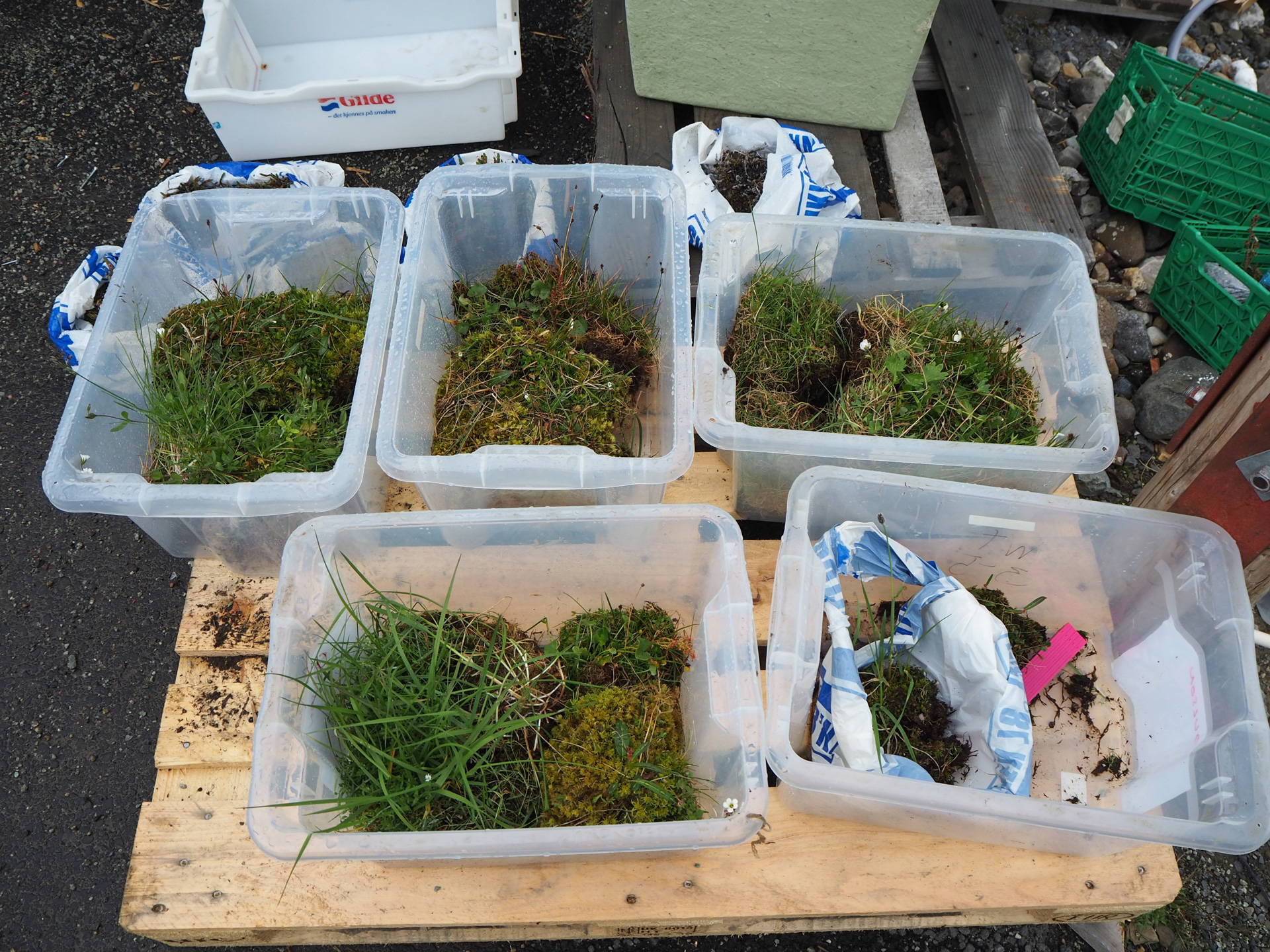
Since 2015 we have helped design, organize, and teach seven international Plant Functional Traits Courses (PFTC) in China, Peru, Svalbard, Norway, and South Africa. Each course brings international students and researchers together to design studies, collect standardized trait, physiological, and ecosystem flux data along climate gradients and within global change experiments, analyze the results, and publish them. Open science practice is built into the course structure rather than taught alongside it.


Our lab’s contribution focuses on thermal and physiological measurements, including leaf energy balance traits, leaf temperatures, and assimilation-temperature responses. The 2022 Norway campaign alone yielded 88 FAsTeR assimilation-temperature responses and 2.26 billion leaf temperature measurements, alongside nearly 29,000 trait measurements and ecosystem CO2 flux data.
The resulting datasets are substantial contributions, in several cases increasing published trait coverage of the regional flora by four to fivefold and providing the first trait records for a large fraction of the species sampled. They have supported findings on how alpine and Arctic vegetation responds to warming, including that intraspecific trait variability underlies the resistance of High Arctic plant communities to two decades of experimental warming, that phenotypic plasticity allows alpine species to shift trait values toward those of warmer destination communities, and that experimental warming reliably increases plant height while its effects on other traits are contingent on precipitation, growth form, and site.

Key papers
Erkelenz J, Geange SR, Atkinson J, Anderson E, Correia M, Ahler SJ, Bradler P, Elsy A, Maré C, Eshelman S, Mauki D, Guclu C, Eckberg J, Maitner B, Gya R, Töpper J, Klanderud K, Enquist BJ, Michaletz ST, Ray CA, von Oppen J, Telford RJ, Padullés Cubino J, Halbritter AH, Vandvik V. 2025. Intraspecific functional trait responses to experimental warming vary with precipitation and growth form. Journal of Vegetation Science 36:e70098. Full text
Halbritter AH, Vandvik V, Bison NN, Cross M, Greve M, Kemppinen J, Kühn N, Maitner BS, Michaletz ST, Navarro J, Niittynen P, le Roux PC, White JDM, et al. 2025. Plant traits and associated ecological data from Afromontane grasslands of Maloti-Drakensberg, South Africa. Scientific Data 12:1778. Full text
Vandvik V, Halbritter AH, Macias-Fauria M, Maitner BS, Michaletz ST, Telford RJ, Bison NN, Chacón-Labella J, Cotner S, Egelkraut D, Garen JC, Gaudard J, Geange SR, et al. 2025. Plant traits and associated ecological data from global change experiments and climate gradients in Norway. Scientific Data 12:1477. Full text
Jónsdóttir IS, Halbritter AH, Christiansen CT, Althuizen IHJ, Haugum SV, Henn JJ, Björnsdóttir K, Maitner BS, Malhi Y, Michaletz ST, Roos RE, Klanderud K, Lee H, Enquist BJ, Vandvik V. 2023. Intraspecific trait variability is a key feature underlying high Arctic plant community resistance to climate warming. Ecological Monographs 93:e1555. Full text
Geange SR, von Oppen J, Strydom T, Boakye M, Gauthier T-LJ, Gya R, Halbritter AH, Jessup LH, Middleton SL, Navarro J, Pierfederici ME, Chacón-Labella J, Cotner S, Farfan-Rios W, Maitner BS, Michaletz ST, Telford RJ, Enquist BJ, Vandvik V. 2021. Next-generation field courses: Integrating Open Science and online learning. Ecology and Evolution 11:3577-3587. Full text
Henn JJ, Buzzard V, Enquist BJ, Halbritter AH, Klanderud K, Maitner BS, Michaletz ST, Pötsch C, Seltzer L, Telford RJ, Yang Y, Zhang L, Vandvik V. 2018. Intraspecific trait variation and phenotypic plasticity mediate alpine plant species response to climate change. Frontiers in Plant Science 9:1548. Full text