



MSc, Plant Ecology, University of Calgary
BA, Biology, Hamline University
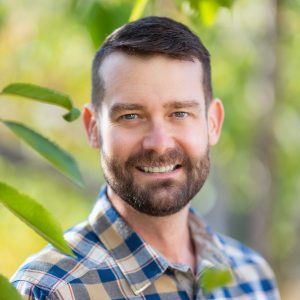
Sean Michaletz
We are interested in the physical processes linking environmental variation to plant physiology, and how this “scales up” to influence higher-level patterns and processes. To investigate these topics, we use interdisciplinary approaches that draw upon fields such as physics, chemistry, engineering, and geoscience. Our work often involves development of mechanistic theory and models, which are parameterized, tested, and refined using data from the laboratory and the field. We also focus on long-term monitoring of climate, ecophysiology, and vegetation dynamics in our growing network of Forest MacroSystems network sites located around the world.

MSc, Biology, Western University
BSc, Biology, Western University
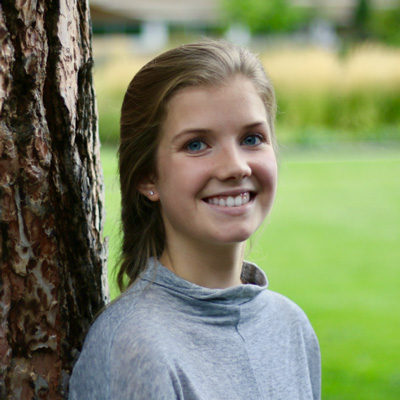
Bridget Murphy
Bridget is a plant ecophysiologist with a foundation in molecular biology, motivated by her long-standing interest in understanding how trees will respond to climate change from cells to whole plants. During her MSc and PhD, her research integrated experimental and field approaches with plant physiology and functional genomics to uncover the mechanisms governing boreal tree responses to warming, drought, and elevated CO2. Bridget will be joining the Michaletz Lab as an NSERC Postdoctoral Fellow, where she will be investigating species‑specific variation and plasticity in photosynthetic heat tolerance across boreal tree taxa through field surveys, controlled warming experiments, and transcriptomic analyses.

Nicole Bison

Juan Mejía
Undergraduates
Jordyn Eyton
Elliot Hui
Xinruo Liang
Myles Olson
Alumni
Visiting graduate students
Yi He, MSc student at Zhejiang A&F University
Josh Lee, PhD candidate at Western Sydney University
Undergraduates
Joani Viliunas, MS student at University of Hawaii
Lachlan Byrnes, PhD student at Yale University
Edward Sun, PhD student at The University of British Columbia
Jessica Brown, MS student at San José State University
Helena Tremblay
Han Bai
Vivane Beger
Sahaj Chawla
Cougar Smith
Kahsennaró:roks Deom
Jasleen Dhaliwal
Julien Grébert
Katica Naude
Timothy Wong
Neo Wu
Brendan Hansen
Paul English
Matthew Soo
Yanying (Bellie) Zhu
Ethel Way
Justin Chan
Ria Raut, PhD student at the University of California, Berkeley
Nina Dorsch, MSc student at Imperial College London
Sumant Kumble
Himari Honda
Dilay Aykut
Ali Zare
Isaac Borrego

MSc, Ecology, State University of Campinas
BSc, Biological Sciences, State University of Campinas
Hugo Galvão Cândido

Marcella Cross
Marcella will be starting her PhD in Fall 2022. She is interested in forest health and plant signaling mechanisms as they relate to climate change and fire ecology. She completed her undergraduate degree at Cornell University in biological and plant sciences. At Cornell, her research focused on discovering the genes responsible for tomato cuticle development. In addition to the genetic work with tomatoes, she also worked on an independent forestry project studying how electrical signals in response to a stress stimulus can be used to predict plant health.

BSc, Physics, The University of British Columbia
Josef Garen
Josef has broad interests in the effects of climate change on ecological communities. His current research investigates the role of temperature in controlling plant carbon metabolism and primary productivity, using a combination of experimental and observational approaches to test and extend fundamental ecological theory. Josef comes to ecology by way of physics, and he brings an interdisciplinary, quantitative approach to his work.

BS, Botany, University of Wisconsin – Madison
Alex Goke

MSc, Ecology, University of Groningen
BSc, Ecology and Zoology, University of the Witwatersrand
Elizabeth Kleynhans

Nathan Malamud
Nathan is a recent graduate from the University of Oregon and will be joining the lab this September. Nathan comes from a background in mathematics and computer science, and has broad research interests in both forest ecology and plant physiology.
For an undergraduate thesis, Nathan helped analyze soil and leaf litter cores from Barro Colorado, Panama, to study the potential role that fungal pathogens have in maintaining tree biodiversity.
Currently, Nathan is interested in studying stomatal functioning in plants, and to what extent this limits rates of carbon assimilation and water loss across different species. In addition, Nathan hopes to address the potential influences of trait variation and environmental conditions on water use efficiency.

MS, Natural Resources, Oklahoma State University
BS, Forest Engineering, São Paulo State University
Raquel Partelli Feltrin

BSc, Botany, University of Vermont
Timothy M. Perez
I am a botanist who uses physiology to understand the fundamental mechanisms that govern the diversity and distributions of plants. My goal as a scientist is to guide conservation efforts by improving how we predict which species will be most vulnerable to climate change and how climate change may alter ecosystem services like carbon sequestration. The approaches I use to accomplish this goal include empirical bottom-up and more recently theoretical top-down methods.

BS, Biology, Cleveland State University
Milos Simovic
Milos Simovic is a PhD student studying the decline of yellow-cedar (Cupressus nootkatensis) in British Columbia. Yellow-cedar is a long-lived coniferous tree which has experienced substantial decline in British Columbia and Alaska over the past few decades. The decline has been linked to regional warming and loss of snowpack, but the mechanism linking the broader climatic patterns with physiological functioning and decline has not yet been fully elucidated. The goal of Milos’ PhD project is to utilize tools and techniques from various scientific disciplines (physiological ecology, biophysics, mathematical modeling) to investigate the potential causes behind yellow-cedar decline and make inferences about future patterns of decline under a changing climate.